US dollar
 Canadian Dollar






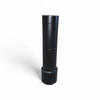

Product Description
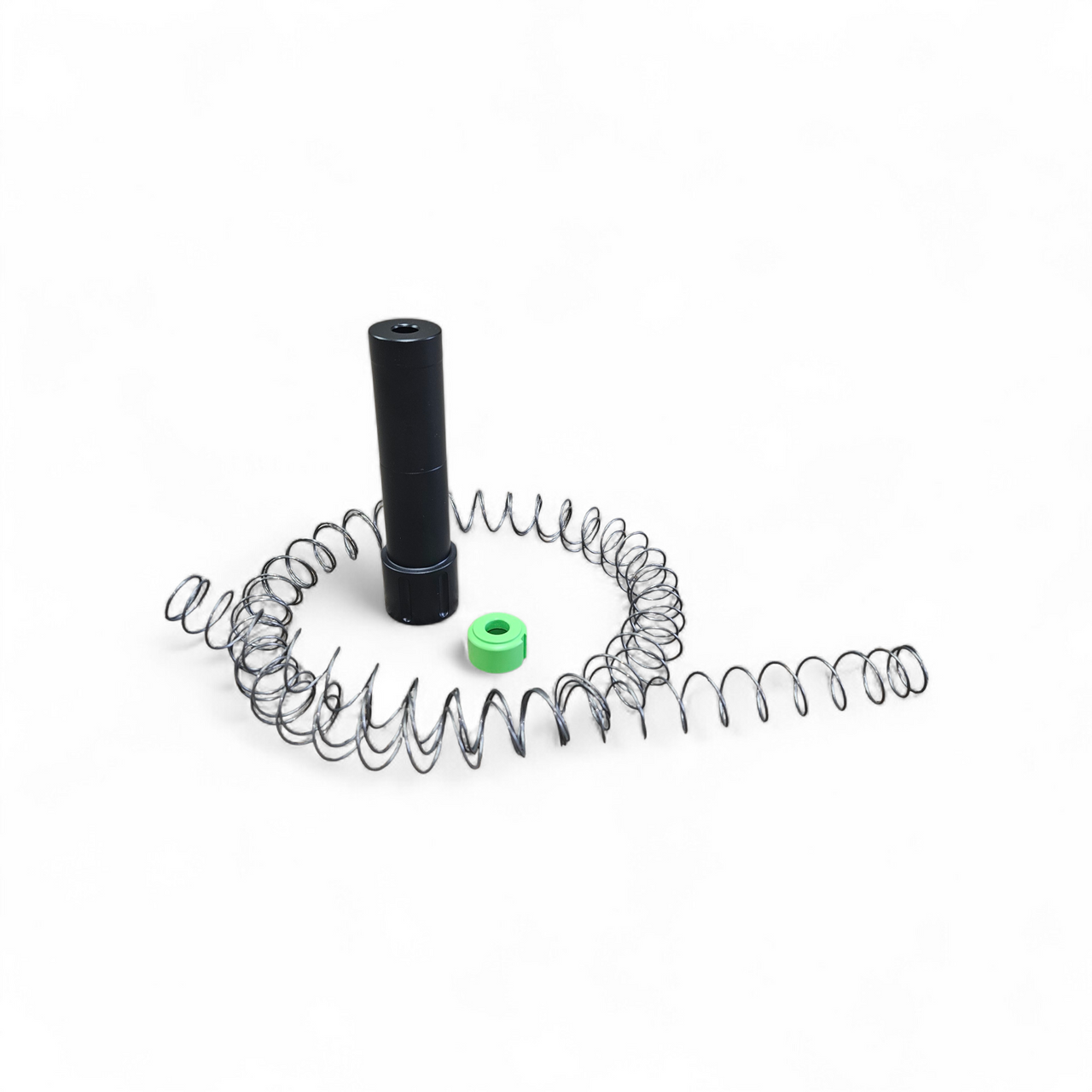
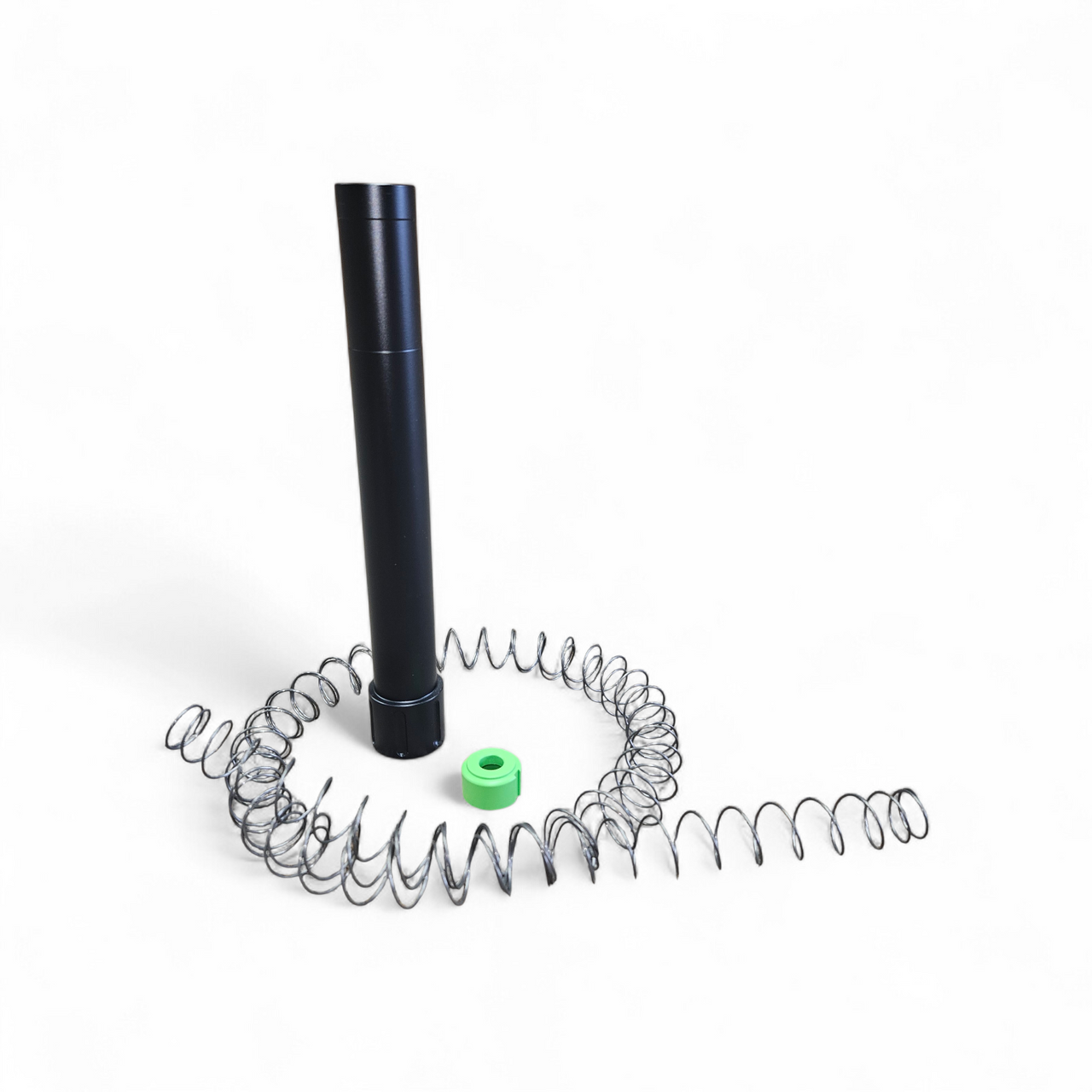
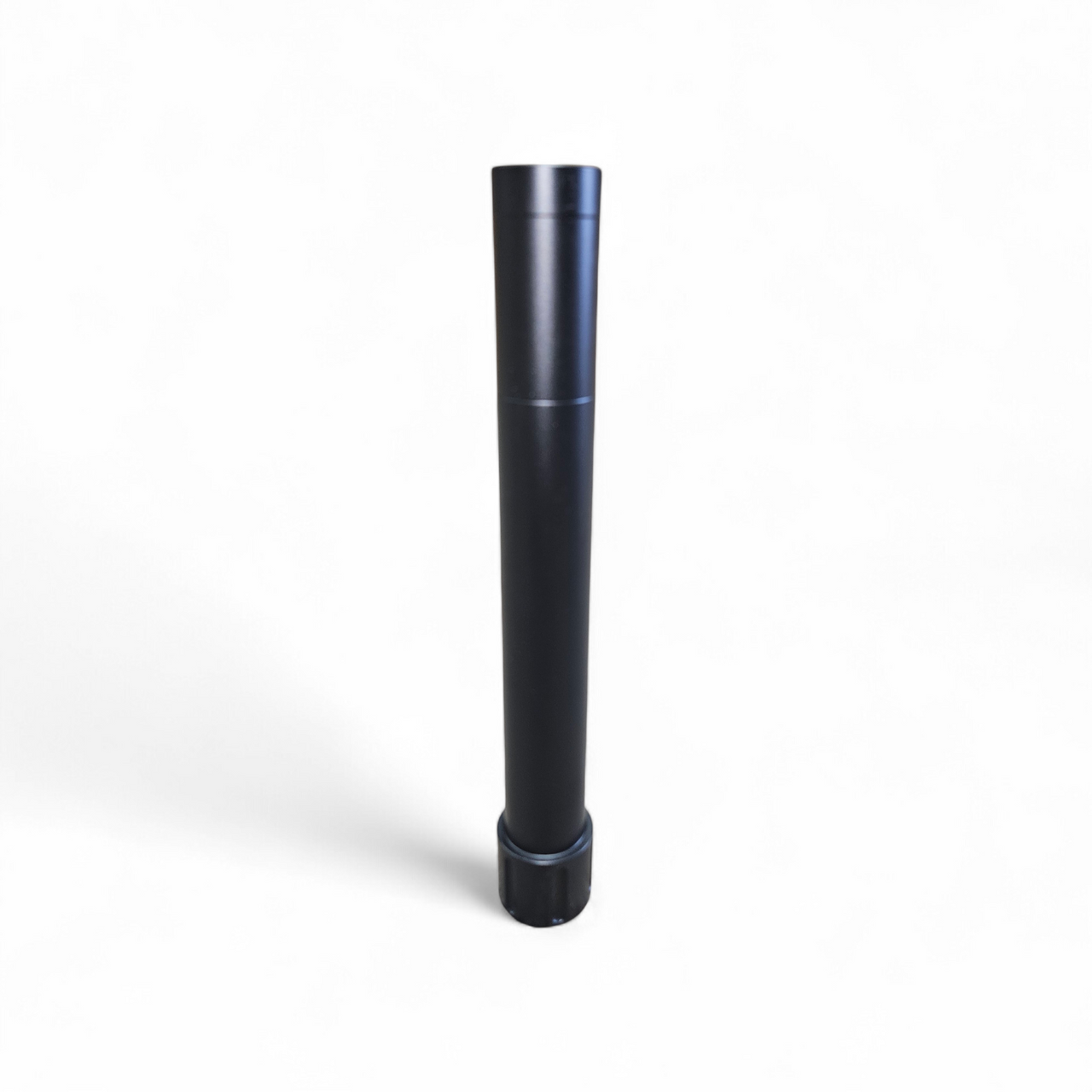
Fits: Remington MCS (Modular Combat Shotgun) with shortened magazine tube and MCS specific barrel (the lug is closer to the receiver than a standard barrel).
THIS PRODUCT IS NOT DESIGNED FOR A STANDARD REMINGTON 870, IF YOU ARE LOOKING FOR A MAGAZINE EXTENSION FOR YOUR REMINGTON 870, PLEASE CLICK HERE
If you are still not sure which product to buy, please read: This product is designed for the Remington MCS (Modular Combat Shotgun). This shotgun is much different than a standard Remington 870 Fieldmaster, Wingmaster, Police Magnum, etc... The main difference in regard to the magazine tube and extensions is the barrel lug spacing and barrel lengths. The MCS has a much shorter magazine tube, and thus, the barrel lug is much closer to the receiver than in a standard 870. Distance from receiver to barrel lug is about 8" on an MCS. Distance from the receiver to the barrel lug on a standard 870 is about 10 1/2".
We have included overall length measurements of our extension tubes so you can measure from your barrel lug to the end of your barrel (muzzle) to ensure you are purchasing the correct extension to meet your needs.
Specifications:
CNC machined from 4140 steel.
Finished product will be Cerakoted in Graphite Black
Comes with:
- 1 Million Cycle Magazine Tube Spring
- No Jam Follower - Type 3 - Remington
Overall length:
- +2 - 4 5/8" - For use with a 14" MCS Barrel
- +3 - 8 1/4" - For use with a 18" MCS Barrel
Made in Canada.
Compatibility: *Likely not compatible with any clamp designed for use with a tube made of aluminum, or having a plastic sleeve covering. These tubes tend to be a little thicker in diameter.
**TO AVOID SHIPPING DELAYS, PLEASE INPUT YOUR PAL NUMBER, DATE OF BIRTH, AND EXPIRY DATE IN THE INFORMATION FORM WHEN PURCHASING ONLINE.**
Why one-piece construction matters
Every multi-piece magazine extension has at least three components: a cap, a tube body, and a nut. Each junction is a potential failure point - a gap where a shell rim can catch, a seam where the bore stops being perfectly round, a thread junction that loosens under recoil.
Conventional tubes are made from extruded or DOM tubing. That means a weld seam running the length of the bore. When we machine from solid barstock, the bore is perfectly round from end to end because it was cut that way, not formed and welded.
There is no cap to unscrew. No nut to back off. No seam for a shell to catch on. One piece. One continuous bore from the threads into a lead end - the same approach used in barrel manufacturing.
Why we machine from 4140 barstock
Magazine tubes live under the gun, at the front of the gun, where they hit things. Door frames. Truck beds. Barricades. Obstacle courses. A thin-wall aluminum or extruded steel tube that dents on contact is a reliability problem waiting to happen - a dent in the bore is a jam you can't clear in the field.
4140 is the same chromoly steel used in most shotgun barrels. We machine from custom-sized barstock using specialized CNC tooling developed over eight to nine months of R&D just to get the process repeatable.
The weight difference between our machined steel and a machined aluminum equivalent is measured in ounces, not pounds. Nobody takes aluminum suppressors into the field. This is the same principle.
Proprietary threading that actually fits
Factory magazine tubes have notoriously inconsistent threading. Remington uses different thread pitches across generations. Mossberg, Winchester, Benelli, and Beretta all have their own specs, and the quality control on factory tubes - even from the big three - varies widely.
We developed a proprietary hybrid thread design engineered to account for the manufacturing variation across generations and models of the major shotgun brands. The result: a tube that threads on cleanly without being so loose that it compromises the bore.
Every tube is laser-engraved with the exact model and length - Mossberg 590 +2, Remington 870 +1 - so there is zero ambiguity about what goes on what gun.
Premium finish, not a shortcut
Every SJ Hardware magazine extension is Cerakote finished. Not phosphate. Not black oxide.
Phosphate was a World War I solution for giving bare steel the ability to absorb oil so it doesn't rust. It works. It is also what you use when cost is the primary driver.
Cerakote is harder, more corrosion-resistant, and looks like it belongs on a firearm that costs what yours cost. Standard finish is black. Factory-matched Cerakote colors are available for popular models - including the Benelli M4, Beretta 1301, and Stoeger M3K - at no additional charge.